THE UNIT
One newton, one apple
The newton is the SI unit of force, equal to 1 kg × 1 m/s². That is roughly the weight of an apple.
Try the weight check doodleforce
WHAT THE PHYSICS SAYS
Every push and pull around you is a force.
Weigh a bag on other worlds
1 NEWTONabout one apple
Forces are measured in newtons, and one newton is roughly the weight of an apple. Once you know that, weight, gravity and the three laws of motion start to make everyday sense.
At a glance
0.2248 lb
A newton in pounds
One newton equals 1 kg × 1 m/s², roughly the weight of an apple, and about 0.2248 pounds.
THE NEWTON · ENERGY EDUCATION
≈ 9.8 N
Weight of 1 kg at Earth's surface
Earth's surface gravity is about 9.8 m/s², so every kilogram is pulled down with roughly 9.8 newtons.
EARTH'S PULL · NASA
TWO NUMBERS WORTH KNOWING
One number to picture a newton,
one to turn kilograms into newtons.
The newton is one of the derived units of the International System of Units (SI). NIST explains that the SI is built from 7 base units, including the kilogram, metre and second, which define 22 derived units with special names.
A QUICK WEIGHT CHECK
Your mass is the same everywhere, but your weight depends on gravity. Pick a world to see the weight of a 1 kg bag of sugar, in newtons. The bar shows how strong the pull is.
Weight = mass × gravity. Gravity values from the NASA Planetary Fact Sheet.
THE SHORT ANSWER
Forces start, stop and steer things.
Weight is simply gravity's force on a mass.
THE UNIT
The newton is the SI unit of force, equal to 1 kg × 1 m/s². That is roughly the weight of an apple.
Try the weight checkACTION AND REACTION
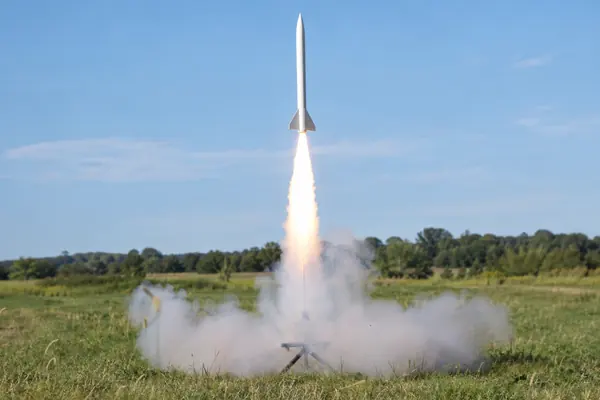
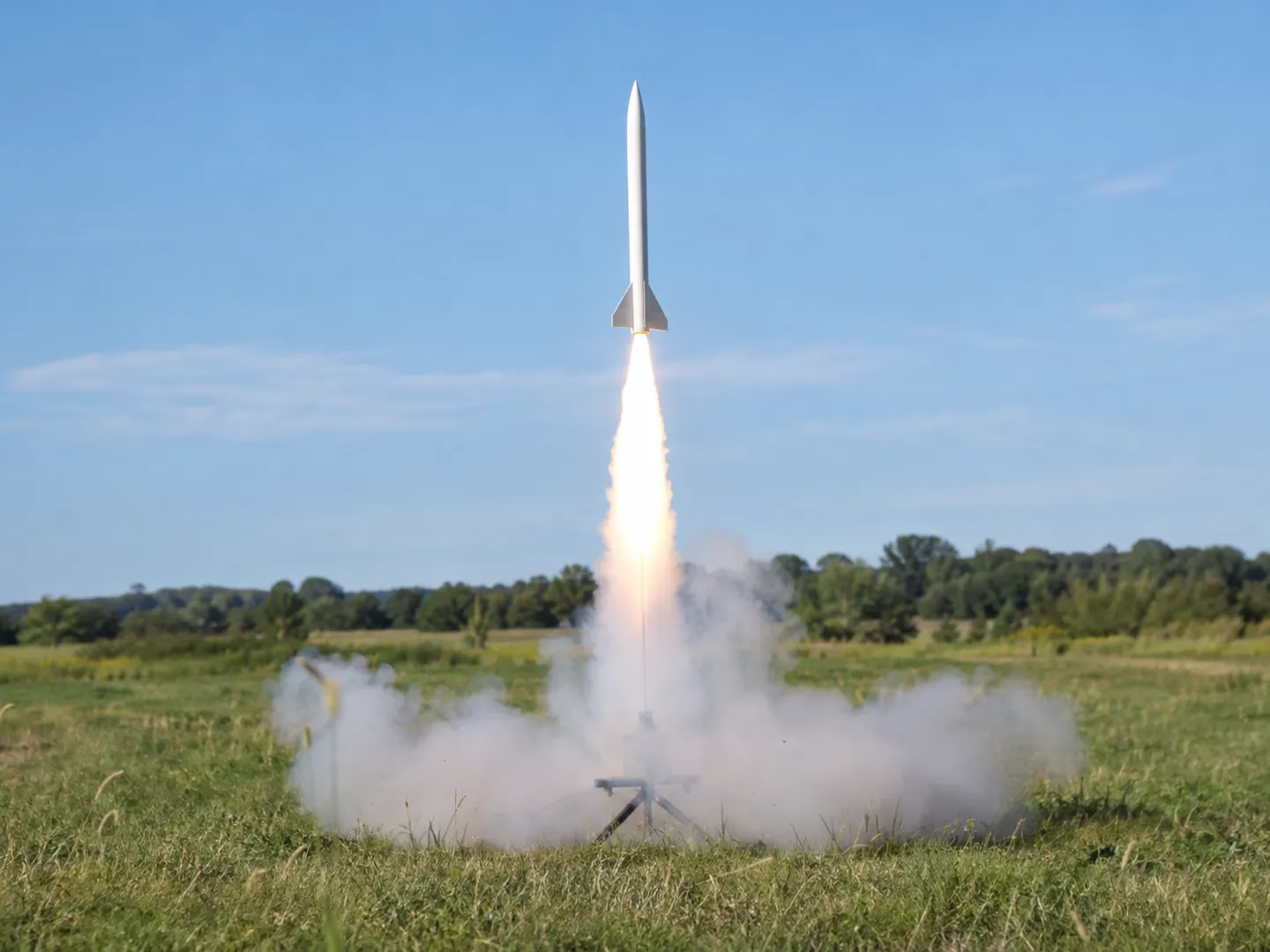
When one object pushes on another, the second pushes back equally and oppositely. A jet or rocket throws gas backwards and is pushed forwards.
See the three lawsMASS
For the same force, a heavier object accelerates less than a lighter one. That is why a loaded barrow takes more effort to get moving.
Spot it at home
FOUR FORCES TO SPOT
You do not need a lab. These everyday moments show the three laws of motion at work.
Feel its weight in your palm. That gentle pull is roughly one newton.
The same push speeds up the lighter one more. Acceleration depends on mass and force.
It soon slows and stops. The first law says a moving object keeps going unless an unbalanced force acts, so something must be pushing back.
Air rushes out one way and the balloon shoots the other, the same action and reaction that drives a jet engine.
THE THREE LAWS OF MOTION
First, an object at rest stays at rest, and a moving object keeps moving in a straight line at a steady speed, unless an unbalanced force acts on it. This resistance to change is called inertia. Second, an object's acceleration depends on its mass and the force applied, often written F = m × a.
Third, whenever one object exerts a force on another, the second exerts an equal and opposite force back. NASA uses a wing as an example: it pushes air down, and the air pushes the wing up. The laws were first presented in 1686.
Questions
The SI unit of force, equal to 1 kilogram × 1 metre per second squared. It is roughly the weight of an apple and about 0.2248 pounds.
No. Weight is a force: NASA describes it as the force generated by gravitational attraction. Your mass stays the same, so your weight changes from world to world while your mass does not.
On Earth, about 9.8 newtons, because surface gravity is about 9.8 metres per second squared.
Yes. The Moon's gravity is about 1.6 m/s² against Earth's 9.8, so you would weigh roughly a sixth as much, though your mass would not change.
Force equals mass times acceleration. For a constant mass, a bigger force gives a bigger acceleration, and for the same force a heavier object accelerates less.
Sources
ABOUT THIS NAME
doodleforce.com is part of the DoodleSale portfolio. It isn't in an auction right now, but you can ask about leasing it.